

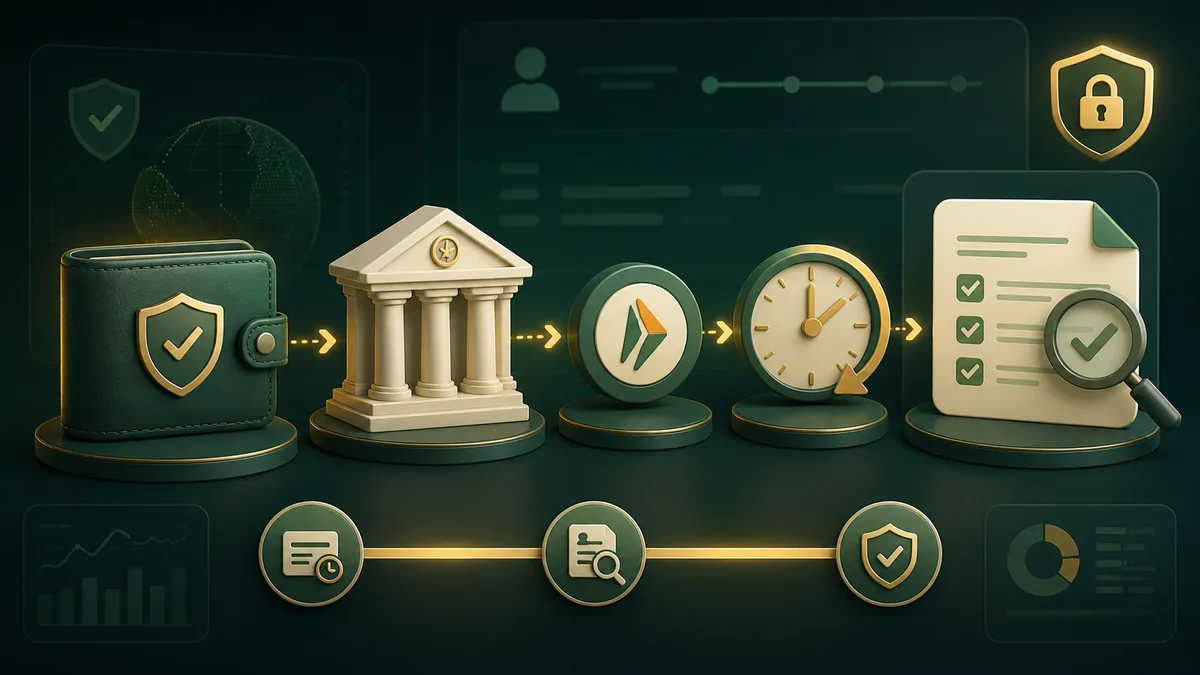
Quick answer: Understand a pending Yono Games withdrawal by separating app review, KYC, bonus eligibility and UPI settlement before raising a documented complaint. Features, versions and operator rules can change, so confirm important details with the current primary source.
First identify where the withdrawal is pending
“Pending” can describe several different stages. The app may not have approved the request, the operator may be reviewing identity or promotional conditions, a payment provider may have received the instruction, or the banking network may be waiting for confirmation. Those stages have different evidence and different support owners.
Open the withdrawal history and record the exact status, request ID, amount, destination and timestamp. Do not rely only on the wallet balance. A balance reduction can show that a request was created, but it does not prove that the payment was sent to a bank or UPI address.
| Stage | Evidence to keep | Who can explain it |
|---|---|---|
| Requested | Request ID, amount and time | App operator |
| Under review | KYC status and terms shown | App operator |
| Sent | Payment reference and destination | Operator or payment provider |
| UPI pending | UPI transaction reference and bank entry | UPI app or bank |
Check KYC, account names and eligibility
Review whether identity verification is complete and whether the account name matches the permitted payment destination. An operator may pause a request when profile details conflict, documents need review or a location restriction applies. Use only the documented verification screen and privacy policy.
Do not send identity documents through an unknown messaging account. Never pay a separate “verification fee” to release a withdrawal. A support agent should not request your password, OTP or UPI PIN; those details authorize access or transactions and are not evidence of identity for a support chat.

Separate cash balance from bonus balance
Promotional credits may have eligibility, game, expiry or usage conditions that differ from deposited or withdrawable funds. Read the exact terms accepted when the bonus was claimed. A large displayed total can combine categories that are not immediately withdrawable.
Look for a transaction ledger that separates deposits, promotional credits, game results, adjustments and withdrawals. If the app cannot show how the requested amount was calculated, ask for a written breakdown. Do not continue spending to satisfy a condition you did not see or understand.
When the operator says the payment was sent
Ask for the payment reference, destination and send time. Compare the masked UPI ID or bank account with your own details. If the destination is wrong, contact the operator immediately through its published channel rather than creating repeated requests.
NPCI distinguishes failed, pending and successful UPI transactions. A bank debit, app wallet adjustment and beneficiary credit are separate events. Use the transaction history in the relevant UPI app or bank channel to identify the network status instead of trusting a screenshot sent by an unknown person.
Raise the complaint with useful evidence
Send one organized request containing the withdrawal ID, masked account details, amount, date, current status and screenshots that do not expose credentials. Ask which stage owns the delay and what published term applies. Keep the ticket number and response time.
If the issue is a UPI transaction, use the complaint or UPI Help route in the payment app or bank. NPCI states that users can review pending transactions and raise appropriate complaints. Do not send another payment to “activate” a refund or withdrawal.
Know when to stop and escalate safely
Stop when support repeatedly changes the required amount, asks for a new transfer, demands remote screen access or refuses to identify the operator. Preserve lawful records and contact the bank or relevant cybercrime reporting route when an unauthorized transaction or credential request is involved.
Gaming and paid-feature availability in India can change with central and state rules. A downloadable app does not establish that a money feature is permitted in a location. Check current official requirements and the operator’s restricted-location terms; this guide is practical information, not legal or financial advice.
Begin with the operator, not the promotion
A large welcome offer can attract attention, but it tells you very little about the company handling the account. Start by identifying the operator named in the terms, privacy policy and customer-support pages. Those names should be consistent. Look for a usable support route, a clear explanation of eligibility and a policy describing how personal data is processed. A familiar-looking logo or a name containing “Yono” is not evidence of a relationship with another app, bank or gaming company.
If the operator cannot be identified, or if the only support route is an unknown private messaging account, do not rush to register. Save the page address, compare the information across screens and leave when important details remain unclear.
Treat version numbers as information, not proof of safety
A version number helps users compare an installed package with a current release, but a higher number does not automatically make a file official or safe. Check the file name, package information, update notes and source together. An unexpected change in requested permissions deserves attention even when the version looks newer.
Android updates can also affect compatibility. A package may fail because the download is incomplete, storage is low, an older conflicting package is installed or the device no longer supports the app. Resolve the cause instead of switching between random mirrors. Repeated downloads from unrelated sites increase exposure without solving the underlying problem.
Read permissions in plain language
Permissions should match the function a user expects. Network access and notifications may be understandable for an online game, while contacts, call logs, accessibility control or broad file access require a much stronger explanation. Do not approve a permission simply because the installation screen appears routine.
Android lets users review and change permissions after installation. Check them before creating an account and again after an update. Remove access that is not needed. Never grant screen-control or accessibility access to a person claiming to be customer support, because those permissions can expose messages, verification codes and payment activity.
Understand registration and KYC before sharing documents
Real-money features may require an eligible mobile number, proof of age and identity verification. Before uploading a document, confirm why it is required, how it will be stored and how an account can be closed. The name used for KYC may need to match the name on the payment method. Inconsistent details can delay account review or withdrawals.
Do not send identity documents through unofficial chat accounts. Use the verified in-app or operator process and reveal only the information the policy requires. Passwords, one-time passwords and UPI PINs are not KYC documents. A genuine support agent should not need them.
Review the complete money flow
Users often check the minimum deposit but overlook withdrawal limits, verification stages, processing periods and possible fees. Read the rules from deposit through withdrawal. Note whether a promotional balance has separate wagering conditions and whether a bonus expires. A displayed balance is not the same as an immediately withdrawable balance.
When paid features are available, begin with the smallest amount that allows you to understand the process without financial pressure. Keep permitted transaction records and use a payment method in your own name. Stop if someone asks for an extra transfer to unlock a withdrawal, requests a UPI PIN or insists that remote screen access is necessary.
Check location and age eligibility every time
Online gaming and real-money rules vary by jurisdiction and can change. An app being downloadable does not establish that every feature is lawful or offered in the user’s state. Review the operator’s restricted-location list and current local requirements before registration and again when terms change.
Age rules are equally important. Only adults who meet the operator’s stated threshold should use paid features. Do not use another person’s identity, mobile number or payment method to bypass eligibility. That can create legal, privacy and account-access problems later.
Use limits that work before a session begins
A useful limit is decided before play, not after a loss. Set both a time limit and an entertainment budget that will not affect rent, bills, food, debt payments or savings. Keep gaming money separate from essential funds. When the limit is reached, close the app instead of treating it as a target to recover.
Take scheduled breaks and avoid playing while tired, upset or under the influence of alcohol. Chasing losses changes gaming from entertainment into a financial response. Where an operator provides deposit limits, cool-off periods or self-exclusion tools, learn how they work before they are urgently needed.
Make a final decision with a written checklist
Before installing or registering, ask five simple questions: Can I identify the operator? Does the file source match the operator’s current information? Do the requested permissions make sense? Have I read account, payment and withdrawal terms? Is the app available to an adult user in my location? A “no” or “not sure” is a reason to pause.
Directories and reviews can organize information, but they cannot replace the operator’s live terms or local legal advice. Use independent pages to create questions, then verify answers at the source. The best decision may be to wait, choose a different app or avoid paid features entirely.
Frequently asked questions
How long does a Yono Games withdrawal take?
There is no universal time. Check the operator’s current terms and identify whether the request is under app review, sent to a provider or pending in UPI.
Should I pay a fee to release a withdrawal?
Do not send an extra transfer merely because a chat contact says it will unlock funds. Verify published fees and use official support.
What evidence should I save?
Keep the request ID, status, amount, timestamp, masked destination, payment reference and support ticket without exposing passwords, OTPs or UPI PINs.
How this article was produced
Rohan Iyer wrote this guide. Neha Kapoor reviewed its safety, clarity and responsible-use context.
Separates operator withdrawal status from UPI settlement status and applies a transaction-evidence checklist based on public NPCI safety and complaint guidance.
To help readers make a more informed decision before installing, registering or using paid features—not to promise earnings or certify an app.
Sources and editorial references
- UPI Frequently Asked Questions — NPCI ↗
- UPI Complaint Status and Safety — NPCI ↗
- Promotion and Regulation of Online Gaming Act resources — MeitY ↗
Published: 2026-08-11 · Last updated: 2026-08-11 · Review cycle: every 90 days or after a material change · Editorial policy · Request a correction

Rohan Iyer
Responsible Play EditorYono Games Now editorial byline focused on limits, risk communication and regional availability.
View profile and all articles →Yono Games Now does not own or operate third-party apps mentioned in this article. Real-money gaming involves financial risk. Follow local law and use paid features only if you meet the applicable age requirement.